
This article was posted on Cleveland.com. Read more here.
In the years before routine vaccination, from what I understand, there was a great deal of handholding and hand wringing at the bedsides of dying children.
Generations later, we have now forgotten — if we ever knew — that there wasn’t much else to be done. The only remaining firsthand evidence are the dates engraved on the smallest gravestones.
I came of age in a different time. In my entire career, I never once saw a case of measles, polio, diphtheria. Thanks to vaccination, I never had to comfort anyone who had lost a child or sibling to these diseases. I never had to commiserate with a parent whose children spent the whole winter in bed.
One hundred years ago, these experiences were familiar to most, if not all, physicians.
My mother shared stories about the weeks she spent in bed with measles; the residual difficulty it caused to her sight, focus, and concentration; and her gratitude when, in the early 1960s, she could count her own children among those first vaccinated.
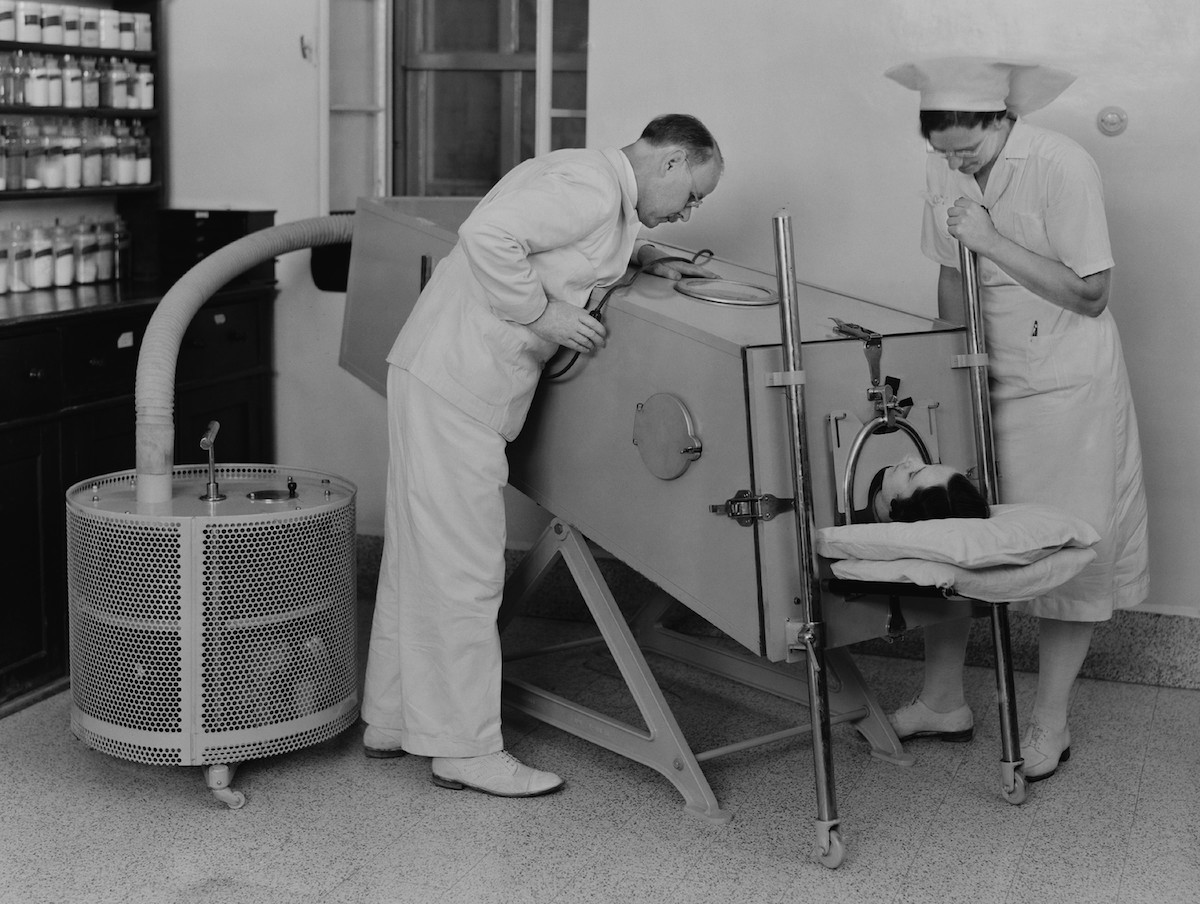
My medical training took place at a local city hospital in whose basement was stored an “iron lung.” The iron lung was a six-foot-long metal tube into which polio patients with paralyzed chest wall muscles were placed in hopes of keeping them alive and breathing while families prayed for their partial, if not full, recovery. Decades after vaccination made the iron lung obsolete, MetroHealth Hospital still kept one on hand for the occasional elderly patient whose health would periodically deteriorate, thereby necessitating a return to the machine for weeks or longer.
The consequences of measles, polio, and other viral illnesses in those who survive can last a lifetime.
Measles is contracted primarily via airborne respiratory droplets that spread by coughing, sneezing, and even talking. Polio is contracted more commonly by contaminated water or food. My mother remembered when parents spent every summer terrified that this would be the year their children paid that unthinkable price. Many families forbade their children from swimming.
It is the way of the world that children adhere to choices made by the adults who raised them. Living with those choices, and juggling their consequences, the child matures into an adult who learns first to make choices on their own behalf and then, sometimes, on behalf of the next generation.
Horrific as it may seem to contemplate that some choices increase profits for coffin-makers and funeral parlors, consider that some of those choices affect not just one’s own children, but everyone in the community — including newborn siblings, pregnant teachers, neighbors with cancer, elders, and others with suppressed immune systems. As a physician, it is difficult to imagine living with the potentially deadly consequences of choosing not to vaccinate one’s children.
There is good news: Once a sufficient percentage of the population is immunized, it becomes much less likely that anyone — even those unable to be vaccinated for any reason — will contract the disease. That’s because, at some point, the likelihood of being exposed to an infected individual becomes essentially nil. This is called herd immunity. The bad news? Current rates of immunization have fallen below the levels required for herd immunity.
Infection with measles appears to erase up to 70% of immune system memory, making patients once again susceptible to the majority of their prior infections. A childhood polio infection may require an individual to live near an academic medical center for their remaining years. The heart of a sibling may remain broken for eternity following the loss of a best friend. Not because fate dealt a cruel hand, but because someone decided not to vaccinate.